
A cyst is a small pocket of tissue often filled with fluid or pus. It can occur due to an injury, infection, or other issues. They’re usually benign but may need treatment for complications.
Cysts can vary in appearance depending on their type and location. Here are 11 types of cysts.
Epidermoid cyst

Epidermoid cysts are small, benign bumps filled with keratin. Kertain is a protein that’s essential in forming your skin, hair, and nails. Epidermoid cysts occur when something blocks hair follicles, and skin cells build up beneath this blockage.
These cysts can look like a skin-colored, tan, or yellowish bump filled with thick material. They typically occurTrusted Source on your face, neck, or torso, but can occur across your body.
In rare cases, epidermoid cysts can be caused by an inherited condition called Gardner syndrome.
Sebaceous cyst

Sebaceous cysts are filled with sebum and are less common than epidermoid cysts. They often form within sebaceous glands, which are part of your skin and hair follicles. Sebaceous glands make oil for your skin and hair.
These cysts most commonly occur on your face, neck, or torso, and are often the result of damage to sebaceous glands.
Read more about sebaceous cysts.
Breast cyst

Benign cysts can develop when fluid collects near your breast glands. They can cause pain or tenderness in the affected area.
While breast cysts are noncancerous, there are many possible other more serious causes for a lump in your breast. It’s important to be familiar with how your breasts typically feel so you’re aware of changes. This way, you’re more likely to notice changes right away.
You should try to make an appointment to see a healthcare professional if:
- you discover a new lump
- an area of your breast is noticeably different than the rest
- a lump changes or grows larger
- you notice unexpected discharge from the nipple
- you have an inverted nipple, and it wasn’t always inverted
Ganglion cyst
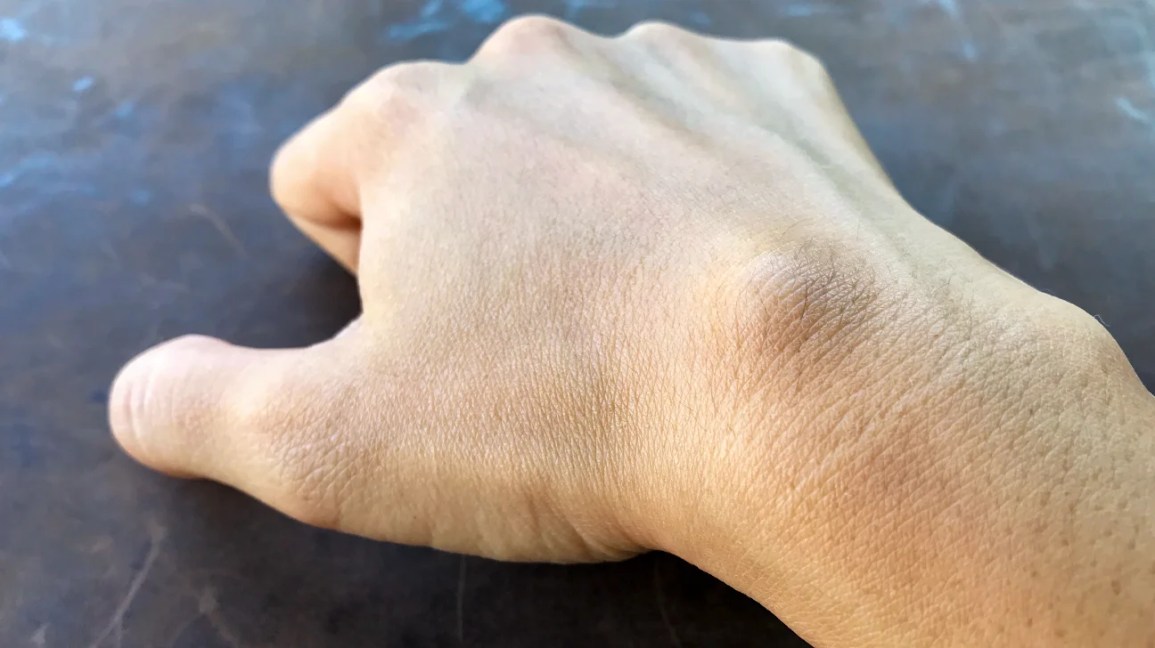
A ganglion cyst is a round, gel-filled lump of tissue that usually appears along tendons or joints, especially in the hands, wrists, ankles, and feet. Fluid accumulation can occur due to injury, trauma, or overuse, but often the cause is unknownTrusted Source.
A ganglion cyst is common, harmless, and doesn’t cause pain or difficulties unless it grows and puts pressure on other structures.
Read more about ganglion cysts.
Pilonidal cyst

A pilonidal cyst is a common skin condition that forms in the cleft at the top of your buttocks. It consists of a small hole or tunnel in the skin that may become infected and fill with fluid or pus and it typically occursTrusted Source after puberty.
Changing hormones, hair growth, and friction from clothes or from spending a long time sitting may all cause a pilonidal cyst.
Symptoms of an infection include:
- pain when sitting or standing
- discolored or sore skin around the area
- pus or blood draining from the abscess, causing a foul odor
- swelling of the cyst
- hair protruding from the lesion
Read more about pilonidal cysts.
Ovarian cyst
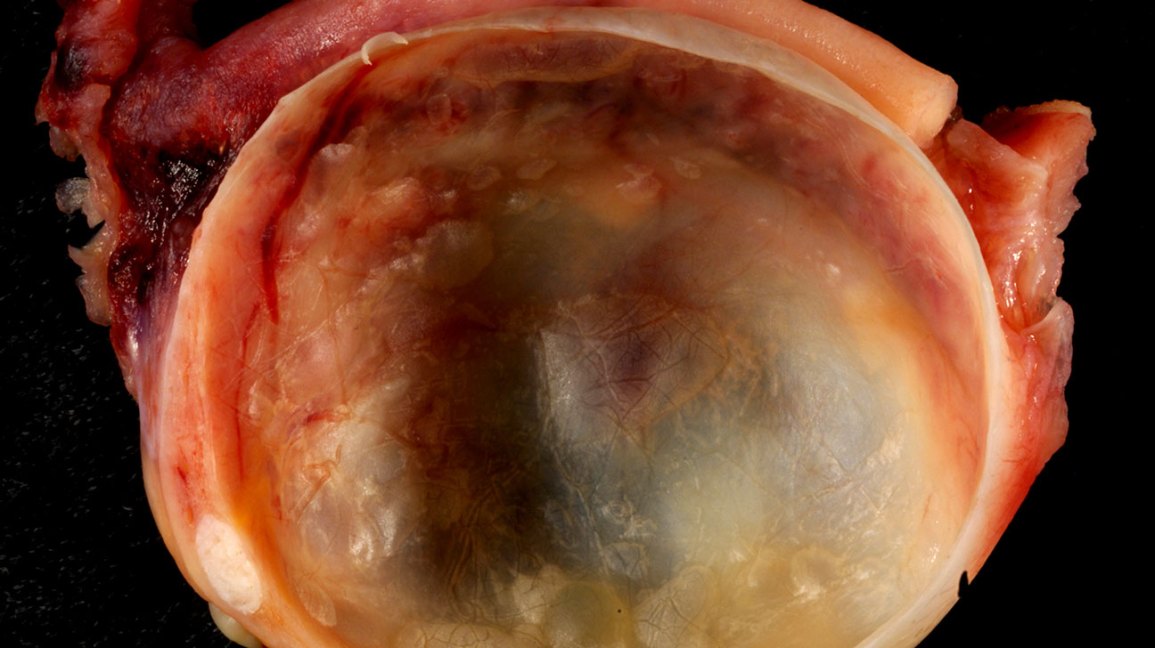
Ovarian cysts often form when the follicle that normally releases an egg doesn’t open. This causes fluid to build up and form a cyst.
Another common type of ovarian cyst occurs after the follicle releases the egg and improperly recloses and collects fluid.
Ovarian cysts occur most oftenTrusted Source in those of menstrual age and are typically first found during pelvic exams.
Ovarian cysts are associated with an increased risk of cancer when they occur after menopause.
Read more about ovarian cysts.
Baker (popliteal) cyst

A Baker cyst is a swollen, fluid-filled sac at the back of your knee.
Causes of Baker cysts include conditions or occurrences that affect the joints such as arthritis, inflammation from repetitive stress, or a cartilage injury. Baker cysts can cause inflammation and pain and lower range of motion in your knee.
Physical therapy, fluid draining, and medication can all be used to help treat a Baker cyst.
Pilar cyst

A pilar cyst is a noncancerous, skin-colored, round bump that develops under the surface of your skin. They usually affectTrusted Source the skin on the scalp and results from protein buildup in a hair follicle.
They’re not cancerous, but they can grow to a size that can be uncomfortable.
Mucous cyst

A mucous cyst is a fluid-filled lump that forms on your lip or around your mouth when the salivary glands become plugged with mucus. The most common causes of mucous cysts include:
- lip or cheek biting
- lip piercings
- rupture of the salivary gland
- improper dental hygiene
Mucous cysts will often go away on their own. But if you have recurring or frequent mucous cysts, you may need medical treatment.
Branchial cleft cyst

A branchial cleft cyst is a type of developmental irregularity in which a lump develops on one or both sides of your neck or below your collarbone. It occurs during embryonic developmentTrusted Source when tissues in your neck and collarbone, or branchial cleft, develop differently.
In most cases, a branchial cleft cyst isn’t dangerous. But it may cause skin irritation, skin infection, or — in very rare adult cases — cancer.
Read more about branchial cleft cysts.
Perineural (Tarlov) cyst

A perineural cyst is a fluid-filled sac that forms on the spine.
Causes are unknown, but it may resultTrusted Source from back trauma, including falls, injuries, and heavy exertion.
A perineural cyst can cause pain in your lower back, buttocks, or legs, but this is rare. If you do have symptoms, draining the fluid can help to relieve them.
Read more about perineural cysts.
Pictures of pseudocysts
A pseudocyst shares some of the characteristics of a cyst, but the bump doesn’t have its own lining. Here are three types of pseudocysts.
Folliculitis (ingrown hair cyst)

Folliculitis is an infection of hair follicles. It’s often the result of a fungal or bacterial infection and can often resemble acne.
These pseudocysts are often seen in people who use hair removal methods like shaving or waxing. Ingrown hair cysts are an example of folliculitis. While ingrown hair cysts are possible, if you have bumps that appear near ingrown hairs, there’s a good chance that they’re actually razor bumps instead.
Razor bumps are also known as pseudofolliculitis barbae, which is a type of pseudofolliculitis. Unlike folliculitis, pseudofolliculitis isn’t usually infectious.
Read more about ingrown hair cysts.
Chalazion

A chalazion is a small, usually painless lump on your eyelids that occurs when the duct of the meibomian gland, an oil gland, is blocked.
These pseudocysts can cause tenderness, blurred vision, and painful swelling. If they get too big, they can cause vision difficulties.
Cystic acne

Cystic acne results from a combination of bacteria, oil, and dead skin clogging the pores. It’s the most severe type of acne, but it usually improves with age.
Cystic acne can look like large, pus-filled boils on the skin. It can also be painful to the touch. If these boils rupture, they can cause scarring.
Cystic acne most commonly occurs on your face, chest, neck, back, and arms.
If you believe you may have cystic acne, a dermatologist can prescribe medications to help treat it.
Joven was hospitalized after being penetrated…See more

In an age where dating apps allow people to connect across geographic and cultural boundaries like never before, the visibility of interracial relationships—especially between white women and Black men—has surged. While once taboo in many parts of the United States, these partnerships have become increasingly common, raising questions about attraction, culture, and societal change.
One explanation is the ongoing breakdown of racial taboos. In the not-so-distant past, such relationships were met with hostility or even criminal penalties in certain U.S. states. The landmark 1967 Supreme Court decision Loving v. Virginia legalized interracial marriage nationwide, but cultural resistance lingered for decades.
Today, younger generations tend to view race through a different lens—less as a social barrier and more as a facet of identity. “Millennials and Gen Z are growing up in more diverse schools, workplaces, and friend groups,” says Dr. Amy Ellis, a sociologist at the University of Georgia. “Exposure breeds understanding, and understanding often leads to connection, including romantic connection.”

The Role of Representation
The media, too, plays a powerful role in shaping attraction. Over the past 20 years, more Black men have been portrayed in mainstream entertainment as charismatic, confident, and desirable. From athletes like LeBron James and entertainers like Michael B. Jordan to characters in popular Netflix series, the romantic visibility of Black men has skyrocketed.
At the same time, social media has created a space where people can celebrate interracial love openly. Hashtags like #interraciallove and #blendedfamilies garner millions of views on platforms like TikTok and Instagram.
“These platforms have humanized what older generations might still see as controversial,” says culture critic Tenisha Hodge. “They’ve helped normalize love that crosses racial boundaries.”
Attraction vs. Fetishization
Still, it’s important to note the distinction between genuine attraction and fetishization. While many white women are drawn to Black men for who they are—personality, values, humor, shared interests—there remains a troubling pattern of some women exoticizing Black men based on cultural myths or hypersexualized stereotypes.
“Fetishization reduces a person to a set of physical or racial traits,” warns Dr. Reggie Banks, a psychologist who specializes in interracial relationship dynamics. “It’s objectification, not love.”
Banks adds that while mutual attraction is natural, it becomes problematic when rooted in assumptions—such as the widespread stereotype of Black men being more virile or dominant. “That kind of thinking dehumanizes both partners and can lead to unhealthy relationship dynamics.”
Challenges Remain
Despite growing acceptance, interracial couples—especially Black male/white female pairings—still face unique challenges. Families, friends, or communities may be less accepting. Some partners must navigate cultural differences, microaggressions, or questions about their motives.
“People still stare when we walk into a restaurant together,” says Lauren, a 28-year-old white woman who has been with her Black fiancé, Marcus, for four years. “It doesn’t bother us as much anymore, but the fact that it happens reminds us that not everyone’s comfortable with what we represent.”

Love Beyond Borders
At the heart of it, interracial attraction reflects a broader human truth: love is complicated, and people are drawn to each other for a wide range of reasons—none of which can be explained solely by race.
Rather than reinforcing stereotypes or simplifying attraction to racial clichés, the modern trend of interracial relationships points to a more interconnected world—where cultural lines are increasingly blurred and love is, ideally, judged not by the color of one’s skin but by the content of one’s character.
“It’s not about Black men or white women—it’s about people,” says Dr. Ellis. “And the more we remember that, the closer we get to a society where love truly knows no bounds.”
A Sudden Clash Between Wild Instincts

In the middle of what seems like a calm outdoor setting, tension rises as a wolf suddenly lunges toward a rooster near a water basin. The moment feels intense and unexpected, turning an ordinary scene into a dramatic encounter.
The rooster reacts instantly, spreading its wings wide in an attempt to defend itself and appear larger. Its quick movement shows instinct and survival kicking in, while the wolf moves with focus and determination.
Around them, the environment remains still, almost as if everything pauses to witness the confrontation. The simple water basin becomes the center of a struggle, highlighting how quickly peace can shift into chaos in the natural world.
The footage has gone viral on social media, moving viewers with this rare display of courage and instinct.
