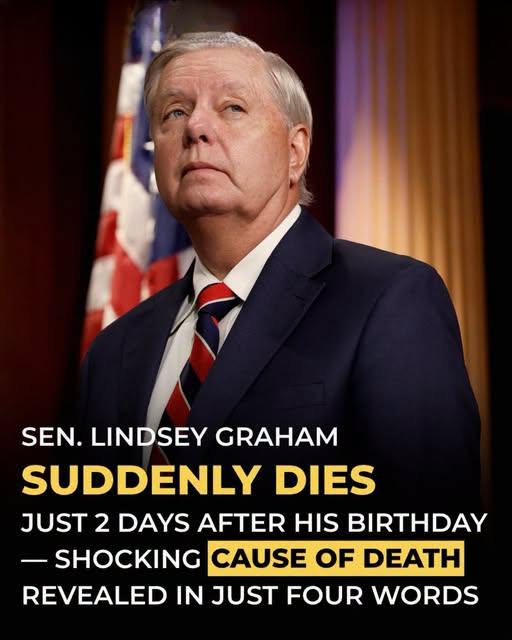
Lindsey Graham Dies at 71: A Look at His Final Days, Political Career, and Lasting Legacy
Veteran South Carolina Senator Remembered After Sudden Passing
The United States political community is mourning the loss of Senator Lindsey Graham, a longtime Republican lawmaker from South Carolina who died at the age of 71 following what his office described as a “brief and sudden illness.” The announcement was released early Sunday after his death on Saturday evening, July 11, 2026. His family requested privacy while supporters, colleagues, and political leaders expressed condolences.
For more than three decades, Graham was a recognizable figure in American politics. He served in the South Carolina legislature, the U.S. House of Representatives, and the U.S. Senate, where he became known for his work on national security, foreign policy, judicial issues, and defense matters.
Throughout his Senate career, Graham developed a reputation as a politician willing to take strong positions on international affairs while also maintaining relationships across different parts of the Republican Party. His career included moments of disagreement with political allies, major legislative battles, committee leadership roles, and a presidential campaign of his own.
His passing marks the end of a long public career that influenced both South Carolina politics and national debates in Washington.
Official Statement From Graham’s Office
Senator Graham’s office announced his death in a statement shared publicly on Sunday. The statement said that he passed away Saturday evening due to a brief and sudden illness and asked the public to respect the privacy of his family during the difficult period.
The announcement did not provide additional medical information or identify a specific cause of death. As of the initial reports, officials had not released further details regarding his health condition.
The news came shortly after Graham’s 71st birthday and following a period in which he remained active in political discussions, committee responsibilities, and public appearances.
Supporters and colleagues quickly began sharing messages honoring his decades of service. Many highlighted his commitment to South Carolina, his work in Congress, and his role in shaping debates on foreign policy and national security.
Final Public Activities Before His Death
Before his death, Graham had continued his work as a senator and remained involved in international issues. He had recently returned from an overseas trip connected to discussions involving Ukraine and broader global security concerns.
Foreign policy was one of the issues that defined much of Graham’s political career. Over the years, he frequently argued that the United States should maintain strong relationships with international allies and take an active role in responding to global threats.
His positions on defense and international affairs made him a frequent participant in discussions about America’s role around the world. He was especially vocal on issues involving Russia, Ukraine, Iran, and other national security matters.
The senator’s final months reflected the same areas of focus that had shaped his public career for decades: military readiness, international partnerships, and America’s position on the global stage.
Political Reactions Following His Death
News of Graham’s passing prompted reactions from political figures across the country. Supporters described him as a dedicated public servant and a strong advocate for the people of South Carolina.
South Carolina Governor Henry McMaster praised Graham’s commitment to his state and country, describing him as a close friend and a determined advocate.
President Donald Trump had a long and complicated political relationship with Graham. During the 2016 Republican presidential primary, the two men competed against each other, but their relationship later changed, and Graham became one of Trump’s prominent allies in the Senate.
Trump previously praised Graham’s work and described him as an important supporter during his administration.
The relationship between the two politicians became one of the more notable developments in Republican politics. Graham’s ability to move from political competition with Trump to a close working relationship demonstrated his influence within the party.
A Career Spanning More Than Three Decades
Lindsey Graham’s political journey began in South Carolina before he reached national office.
He was elected to the South Carolina House of Representatives in 1992. Two years later, he won election to the U.S. House of Representatives, beginning his service in Congress.
In the House, Graham represented South Carolina’s Third Congressional District. During his time there, he became involved in national issues and developed a reputation as a conservative lawmaker with a focus on defense and legal matters.
In 2002, Graham successfully ran for the U.S. Senate, beginning a Senate career that lasted more than two decades.
Over multiple reelection campaigns, he maintained strong support among South Carolina voters and became one of the state’s most recognizable political figures.
His Senate career included leadership positions on influential committees, including the Judiciary Committee and the Budget Committee. He also served on other major panels dealing with government spending, environmental policy, and legislative oversight.
Leadership Roles in the Senate
During his years in the Senate, Graham played a significant role in several major political debates.
One of his most notable areas of influence was the Senate Judiciary Committee, where he participated in discussions involving federal courts, judicial nominations, and constitutional issues.
He also gained national attention through his involvement in high-profile hearings and investigations. His approach often combined detailed legal arguments with a direct communication style that made him a frequent presence in national media coverage.
Beyond judicial matters, Graham focused heavily on defense policy and America’s military role overseas. His background as a military lawyer shaped many of his views on national security.
His supporters viewed him as a consistent defender of American interests abroad, while critics challenged some of his positions on foreign intervention and military policy.
Regardless of political viewpoint, Graham remained one of the more influential voices in the Senate on national security issues.